


Tent Peak Climbing: A Himalayan Adventure to Remember
Tent Peak Climbing is best suited to those who are intending to step up from trekking to layman mountaineering and it combines all the best elements of the Himalayan expedition. This peak climbing is a popular trekking peak which is located in the north-western region of Nepal. It is one of the most climbed peaks along with the trek of Annapurna sanctuary and we will have the opportunity to see breathtaking views of the Dhaulagiri ranges is also seen while climbing the peak. The trail moves through delightful terraced farms, green hills, and Himalayan water streams and this trail is just 40km far from the tourist town Pokhara.
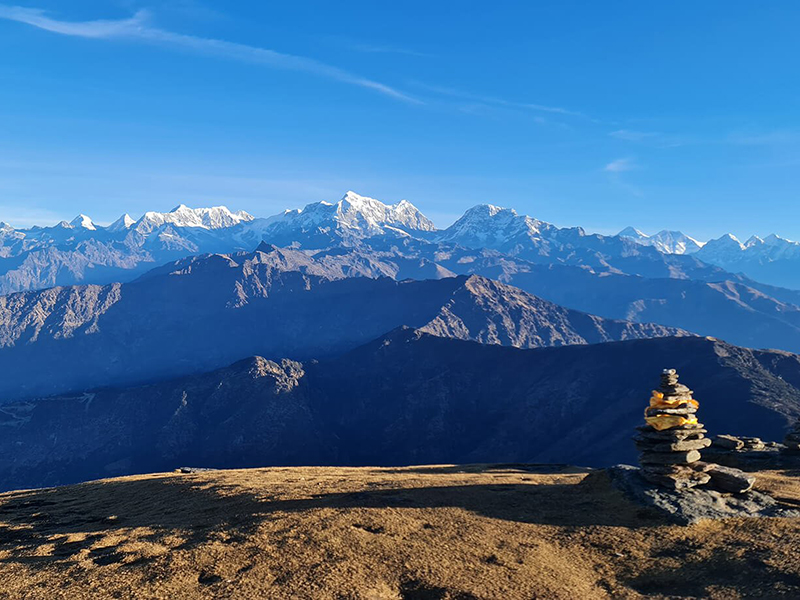
Tent Peak Climbing is not as challenging as the other peak climbing but it offers excellent short trekking and peak climbing experience. The view from the summit of this peak climbing is arguably one of the best Himalayan views which include Annapurna I, III, and south, Hiunchuli, and many more. It is an expedition to gain some mountaineering experience without taking much risk which appears among the list of best trekking peaks in Nepal. The natural vegetation of the alpine forest, lush flower, and green valleys and their picturesque view are enough to pleasure for this trek. The peak is with many other attractive peaks and the climb up to the summit is suitable for those who are healthy.
Nestled deep within Nepal’s Annapurna Sanctuary, Tent Peak (Tharpu Chuli) stands as a perfect introduction to Himalayan mountaineering. At 5,663 meters (18,575 ft), it’s not the tallest peak in the region, but it offers a blend of trekking and technical climbing that makes it ideal for novice climbers or experienced trekkers looking to take the next step.
Why Tent Peak?
Tent Peak is aptly named—it rises like a perfect pyramid in the midst of the Annapurna amphitheater. The summit provides breathtaking panoramic views of Annapurna I (8,091m), Machapuchare (6,993m), Hiunchuli, and other snow-capped giants. Climbing it doesn’t require advanced mountaineering experience, yet it still presents a meaningful challenge.
It’s the perfect “first Himalayan climb”—ideal for those who want to go beyond trekking and experience roped-up glacier travel, crampon use, and basic alpine techniques.
Best Season for Climbing
Choosing the right season is crucial for a safe and successful Tent Peak (Tharpu Chuli) expedition. Weather in the Himalayas can be unpredictable and extreme, so it’s important to plan your climb during the optimal windows of stable conditions and clear visibility.
Spring Season (March to May)
- Stable weather and moderate temperatures at high altitudes.
- Clear skies with excellent views of the Annapurna range.
- Blooming rhododendrons and lush greenery along the trekking route.
- Longer daylight hours for trekking and climbing.
- Why spring is ideal: Snow conditions are usually favorable, and the post-winter environment offers fresh snowpack with lower avalanche risks than winter or early spring. It’s also less crowded than autumn on some routes.
Autumn Season (September to November)
- Crisp, clear weather with little to no rain.
- Panoramic mountain views and stunning sunsets.
- Dry trails and excellent climbing conditions at high altitude.
- Why autumn is ideal: After the monsoon, the atmosphere is washed clean of dust, giving crystal-clear visibility. Weather is generally very reliable, making summit success rates higher.
Monsoon (June to August)
- Heavy rainfall, slippery trails, and frequent landslides.
- Poor visibility and cloud-covered mountains.
- High risk of leech infestation and flight delays due to weather.
Winter (December to February)
- Extremely cold temperatures and deep snow cover at higher elevations.
- Increased risk of avalanches and harsh winds on summit day.
- Teahouses in remote villages may be closed due to low traffic.
Technical Difficulty of Tent Peak Climbing
Tent Peak (Tharpu Chuli) is classified as a Trekking Peak by the Nepal Mountaineering Association, making it more accessible than Nepal’s expedition-level giants. However, climbers should not underestimate the challenges it presents. Tent Peak offers a moderate level of technical difficulty, suitable for those with basic mountaineering experience or physically fit trekkers looking to transition into climbing.
1. Terrain and Route Features
The climb typically begins from Annapurna Base Camp (ABC) and ascends through a combination of glacier travel, snowfields, steep snow slopes, and rocky ridges. Some of the key technical features include:
- Snow and Ice Slopes: Climbers face slopes up to 40–50 degrees in gradient, particularly near the summit ridge. Proper crampon technique and self-arrest skills are essential here.
- Crevasse Zones: The glacier sections may have hidden crevasses, so roped glacier travel is often necessary.
- Mixed Terrain: The final approach to the summit may involve scrambling over exposed rock sections, particularly if the snow coverage is light.
- Altitude Factor: At 5,663 meters (18,575 ft), the thin air adds a significant challenge. Altitude sickness can affect even the fittest climbers if not properly acclimatized.
Technical Skills Required
Although not extremely technical, Tent Peak does require:
- Use of crampons and ice axe
- Basic rope handling and safety knowledge
- Experience with fixed ropes or being guided on rope
- Comfort with walking on snow and glacier terrain
- Good balance and endurance for exposed ridges
Most guided expeditions provide pre-climb training at base camp, ensuring that climbers are familiar with the required equipment and techniques. For those without prior alpine experience, this trip is often a stepping stone to higher and more technical Himalayan peaks.
Weather Challenges
Sudden changes in mountain weather can make the ascent more technical and dangerous. Whiteouts, snowstorms, or strong winds near the summit can significantly increase the difficulty level. This is why choosing the right season (spring or autumn) and climbing with an experienced guide is crucial.
Comparison with Other Peaks
Compared to other popular trekking peaks like Island Peak (6,189m) or Mera Peak (6,476m), Tent Peak is:
- Slightly less technical than Island Peak, which involves more exposed climbing and fixed rope sections.
- More technical than Mera Peak, which is higher but has a more gradual, less technical summit route.
Trip Itinerary
Outline Itinerary
- Day 01: Arrival in Kathmandu and check-in to Hotel
- Day 02: Drive from Kathmandu to Pokhara (Around 8/9 hours
- Day 03: Drive from Pokhara to Nayapul and trek to Ulleri (2050m.) 5 hours
- Day 04: Trek from Ulleri to Ghorepani (2840m) – 5 Hours
- Day 05: Hike up to Poon Hill (3210m) and trek to Tadapani (2610m) – 4 Hours
- Day 06: Trek from Tadapani to Sinuwa (2350m.) 6-7 hour
- Day 07: Trek from Sinuwa to Deurali (3230m) 6/7 Hours
- Day 08: Trek from Deurali to Annapurna Base Camp (4131m) – 5 Hours
- Day 09: Base camp to Tharpu base camp (4800m) 5-6 hours
- Day 10: Tharpu summit (5,695 m.) and back to Machhapuchhre base camp (3700m) 8-9 hours
- Day 11: Trek from Annapurna Base Camp (ABC) to Sinuwa (2350m) 6/7 Hours
- Day 12: Trek from Sinuwa 3/4 Hours, and drive back to Pokhara – 3 Hour
- Day 13: Jhinu to Nayapul and drive to Pokhara
- Day 14: Drive from Pokhara to Kathmandu
- Day 15: Final Departure
Details Itinerary
Day 01:Arrival in Kathmandu and check-in to Hotel.
The representatives from Kingdom Treks will welcome you at Tribhuvan International Airport upon your arrival. He/she Assist to transfer you to the hotel for the overnight stay.
- Accommodation: Hotel
Day 02: Drive from Kathmandu to Pokhara (Around 8/9 hours)
After having breakfast in the morning today, we drive to Pokhara. It takes around 7 hours to reach Pokhara from Kathmandu by bus. You can also take the flight which take about 30 minutes and in the remaining time, take your time to explore the Pokhara city and Lakeside. We stay overnight at a guesthouse in Pokhara.
- Accommodation: Hotel
- Meals Include: Breakfast, Lunch & Dinner
Day 03: Drive from Pokhara to Nayapul and trek to Ulleri (2050m.) 5 hours
Today, we are going to begin our actual trek from Nayapul. So, we take a short drive to Nayapul from Pokhara, which takes about an hour. From Nayapul, we take a short walk along the banks of Modi Khola, which brings us to Birethanti (1015m). From there, our trail continues through the village and climbs continuously up the side to the Hille (1495m). We eventually reach to Ulleri at 2050m and stay overnight at the tea house.
- Accommodation: Tea House
- Meals Include: Breakfast, Lunch & Dinner
Day 04: Trek from Ulleri to Ghorepani (2840m) – 5 Hours
From Ulleri, continue trek to ghorepani which is main junction trekking trail. Our trail ascends more gently from this point through fine forests of oak and rhododendrons towards Banthanti (2250m). After walking for a couple of hours, we arrive at Ghorepani (2840m) where we stay overnight.
- Accommodation: Tea House
- Meals Include: Breakfast, Lunch & Dinner
Day 05: Hike up to Poon Hill (3210m) and trek to Tadapani (2610m) – 4 Hours
Early in the morning today, we start an hour hiking to Poon Hill (3210m) which is a best viewpoint in the Annapurna Region. Poon Hill offers the best opportunity to witness the phenomenal panorama of the beautiful peaks including Annapurna and Dhaulagiri. Poon Hill is regarded as the Photographer’s paradise. You can enjoy the unobstructed views of the sunrise over stunning snowcapped Himalayas. Poon Hill also offers the best views of sunset too.
After spending about an hour at Poon Hill, we return back to Ghorepani. We take our breakfast at Ghorepani and after that we continue climbing along the ridges through the forest of pines and rhododendron. The climb brings us to Deurali (2960m) and descending further takes us to Tadapani eventually. We stay overnight at a guesthouse in Tadapani (2610m).
- Accommodation: Tea House
- Meals Include: Breakfast, Lunch & Dinner
Day 06: Trek from Tadapani to Sinuwa (2350m.) 6-7 hour
We start our steep downhill walk today through the forests of rhododendrons. Leaving Tadapani and descending through the forests, we reach Gurung village of Gurjung as the trail eases. After Gurjung, we eventually walk to Chhomrung, which at an elevation of 2140m. After chhomong take 2 hours to descend down to Chhomrong Khola and cross the bridge after the normal climb up to Sinuwa. We stay overnight at a guesthouse.
- Accommodation: Tea House
- Meals Include: Breakfast, Lunch & Dinner
Day 07: Trek from Sinuwa to Deurali (3230m) 6/7 Hours
It’s a relatively 6/7 hours walking distance trek today. Our day begins early in the morning with the climb through bamboo forests first, and then through the forest of rhododendron, on to Hinku Cave, and some little villages such as bamboo, dovan, himalaya, and last destination Deurali. We stay overnight at a guesthouse in Deurali.
- Accommodation: Tea House
- Meals Include: Breakfast, Lunch & Dinner
Day 08: Trek from Deurali to Annapurna Base Camp (4131m) – 5 Hours
Starting from Deurali and passing through the Machhapuchhre Base Camp which is often known as Annapurna Sanctuary as the area is surrounded by mountains, we trek another two hours to reach Annaupurna Base Camp at an elevation of 4131m. From Annapurna Base Camp, you can observe some of the awe-inspiring views of the mountains. We stay overnight at a guesthouse.
- Accommodation: Tea House
- Meals Include: Breakfast, Lunch & Dinner
Day 09: Annapurna Base camp to Tharpu base camp (4800m) 5-6 hours
From the Annapurna Base camp, we will follow the trail towards the Tent peak high camp. We will walk towards the tough trail viewing the best and marvelous view of mountains while trekking at this region. The night will be at the tented camp at Tharpu Chuli base camp.
- Accommodation: Camping
- Meals Include: Breakfast, Lunch & Dinner
Day 10: Tharpu summit (5,695 m.) and back to Machhapuchhre base camp (3700m) 8-9 hours
From the base camp of Tharpu Chuli/Tent Peak, we will start the early morning trek to the summit of Tharpu Chuli. We will view the glorious view of the mountains from the top while climbing at the high lands. Then we will return back to the trail to the base camp of Tharpu Chuli. The night will be at the base camp of Annapurna Mountain.
- Accommodation: Tea House
- Meals Include: Breakfast, Lunch & Dinner
Day 11: Trek from Annapurna Base Camp (ABC) to Sinuwa (2350m) 6/7 Hours
Today, we return to Bamboo following the same trail back. Our trail drops by 1700m to the bank of Modi Khola to Bamboo to Sinuwa at 2345m. You can find few teahouses/lodges available to stay at Sinuwa. We stay overnight at a guesthouse.
- Accommodation: Tea House
- Meals Include: Breakfast, Lunch & Dinner
Day 12: Trek from Sinuwa 3/4 Hours, and drive back to Pokhara – 3 Hour
After breakfast, continue trek to Chhomrong village to Jhinu danda. If you are interested in taking a hot bath in a hot spring. That is also possible. It takes 30 minutes down to the hot spring and return to Jhinu Danda 45 minutes. Include the lunch, it takes 2-3 hours. We take a drive back to Pokhara, where we stay overnight at a guesthouse.
- Accommodation: Hotel
- Meals Include: Breakfast, Lunch & Dinner
Day 13: Drive from Pokhara to Kathmandu
We drive back to Kathmandu from Pokhara today. Upon reaching Kathmandu, you can utilize your time for the last minute shopping or you can explore around the city. We celebrate the Farewell Dinner together with the trekking team and spend overnight at the hotel.
- Accommodation: Hotel
- Meals Include: Breakfast and Lunch
Day 14: Final Departure
We are saying good bye to the Kathmandu as your journey in Nepal comes to an end today! We will transfer you to the airport for your returning flight.
Cost Details
Cost Includes
- Local Transport: airport drop off and pick up
- Two-night hotel in Kathmandu with breakfast.
- Two-night hotel in Pokhara with breakfast.
- All Trekking Permits
- Kitchen Equipment, Trekking tents, Dining tent, Kitchen Tents, Toilet Tents, Table and chairs, and Mattresses for Island Peak Base Camp
- Climbing Boots, Ice screws, Snow bars.
- Personal climbing Gear per person such as Crampons, Harness, Ice Axe, Screw gate, Carabiners
- Professional Climbing Guide Chhukung to Chhukung
- Personal insurance, Food, accommodation, and equipment for our staff
- Climbing peak permit, Garbage deposit fees, and other necessary fees
- Packed Lunch for summit day
- Achievement certificate (if you want)
- All our services charge government taxes
Cost Excludes
- Personal Insurance for travel to Nepal (Compulsory)
- Sleeping bag, down Jacket, Gloves (you can rent in Chhukung)
- Personal expenses such as all kinds of drinks, hot showers, snacks or energy bars, internet, Oxygen, donations, tips, etc…
- Porter services to carry your personal or climbing gears
FAQ
What is Tent Peak (Tharpu Chuli)?
Tent Peak, officially known as Tharpu Chuli, is a popular trekking peak in the Annapurna Sanctuary of Nepal. It stands at an elevation of 5,663 meters (18,575 feet) and offers stunning views of Annapurna I, Annapurna South, Hiunchuli, and Machapuchare (Fishtail).
How difficult is Tent Peak climbing?
Tent Peak is considered a moderately difficult trekking peak. It involves glacier travel, basic rope work, and climbing on snow and ice. Some prior high-altitude trekking or basic mountaineering experience is recommended, but it is suitable for climbers with good fitness and a strong sense of adventure.
Do I need previous mountaineering experience?
While technical mountaineering experience is not mandatory, familiarity with walking on snow and the use of crampons, harnesses, and ice axes is highly recommended. Training and guidance will be provided by your climbing guide.
What permits are required for Tent Peak climbing?
You need the following permits:
- NMA Climbing Permit for Tent Peak
- Annapurna Conservation Area Permit (ACAP)
- Trekkers’ Information Management System (TIMS) Card
Your trekking agency usually arranges all the permits for you.
How long does the Tent Peak climbing expedition take?
A typical itinerary takes around 15–20 days, including:
- Arrival in Kathmandu
- Trekking through the Annapurna Base Camp trail
- Summit of Tent Peak
- Return to Pokhara/Kathmandu
When is the best time to climb Tent Peak?
The best seasons are:
Spring (March to May) – Clear skies and stable weather
Autumn (September to November) – Excellent visibility and dry conditions
Winter and monsoon seasons are not recommended due to poor weather and safety risks.
What is the accommodation like during the climb?
- Trekking phase: Lodges and tea houses along the Annapurna trail
- Climbing phase (Base Camp & High Camp): Tented accommodation with full camping support
What is the maximum altitude reached?
The summit of Tent Peak is 5,663 meters (18,575 feet). Proper acclimatization is essential to avoid altitude sickness.
What gear is required?
Essential gear includes:
- Climbing boots
- Crampons
- Ice axe
- Climbing harness
- Helmet
- Warm layered clothing
- Sleeping bag (-20°C rating)
- Trekking poles
Most technical gear can be rented in Kathmandu or Pokhara.
Is altitude sickness a concern?
Yes. The itinerary includes gradual ascent and acclimatization days to reduce the risk. Drinking plenty of water, moving slowly, and listening to your guide are key. Medications like Diamox can also help if needed.
Is Tent Peak climbing safe?
Yes, when conducted with experienced guides and proper acclimatization, it is relatively safe. Always follow your guide’s instructions, and ensure you’re with a licensed, insured trekking/climbing agency.
What is the cost of Tent Peak climbing?
The cost typically ranges between $2,000–$3,500 USD per person, depending on the group size, itinerary, services included, and your chosen agency. This usually covers permits, guide/porters, meals, transportation, and accommodation.
What are the main highlights of the climb?
- Panoramic views from the summit of Annapurna I, Annapurna South, Hiunchuli, and Machapuchare
- Trekking through the picturesque Annapurna Sanctuary
- Experiencing Gurung and Magar culture
- Camping under starlit skies at high altitude
Can I combine Tent Peak with other treks or peaks?
Yes! Common combinations include:
- Annapurna Base Camp (ABC)
- Mardi Himal Trek
- Hiunchuli Peak (for more advanced climbers)
Is travel insurance necessary?
Absolutely. You must have travel insurance that covers high-altitude trekking and climbing (above 5,000m) including emergency evacuation by helicopter.
Route Map
Gallery


Client Reviews


Jerry S

Cäoud cloudthes
Great trip! Megh and Sammy took care of everything. From food, to logistics, to accommodation. Couldn’t have been better.

Bill Steinmetz
Everything was taken care of for us in terms of arrangements and airport transfers. Our guide Megh met us at the airport in Kathmandu, arranged our lodging, meals, flights to and from Lukla, shopping for gear extras in town. All our lodging on the trips was also reserved for us. Meals were all served in the lodges. Megh was on the trek with us along with porters who took our gear. We carried day packs.You should plan 3 weeks minimum for this trip and it will require at least 2 days acclimatization. If I remember correctly, as we got higher, we may have as much as 9 days above 14,000 ft and with that, peaks still rose around us another 4-5 thousand feet if not more. You also should to be in condition for this trek. I also had mild altitude sickness at base camp but did not need intervention. So it is recommended that you learn as much as possible about how to prepare for a trek like this. But the rewards may be well worth it, as some of our photos may illustrate.Consider adding more days for touring in Kathmandu or even for a visit to India on the way home like we did (also arranged by Megh)

Nesrin B
Megh is a great guide, reliable and understanding. He was very helpful to my friend Havva and me during the Annapurna Base Camp trek. He is also fun and interesting. If you travel with Megh, you will be satisfied.

PMR5511
I had an absolutely incredible experience with Kingdom Treks, a top-notch trekking company in Nepal that made my Himalayan adventure unforgettable! Megh and their team delivered a perfectly organized, culturally immersive, and awe-inspiring journey that exceeded all expectations. As someone new to high-altitude trekking, I felt reassured by their focus on safety and flexibility gave me confidence throughout the journey. Megh was phenomenal—knowledgeable, warm, and always ready with fascinating insights about Nepalese culture and the landscapes we explored. Megh’s team, including the hardworking porters, went above and beyond, ensuring we had comfortable teahouse accommodations with hearty meals and jaw-dropping mountain views. Highly Recommend!

REAL INDIA
We had an absolutely incredible experience with Kingdom Trek company in Nepal , Brother Megh is a great guide and a good leader , We enjoyed the trip with this company , always appreciate their efforts, GOD Bless them

Marissa E
As a Canadian female, I’ve trekked with Megh on two trips to Nepal. When we met the first time, I came with a trekking group, we instantly clicked and I now call him “my Nepali dad”. Which he embodies for everyone–he is kind, honest, genuine, and of course, a pro at leading any kind of trek (and making it fun). I went back again a few years later by myself and Megh went above and beyond–picked me up from the airport and helped me navigate busy Kathmandu and Mt. Everest base camp as a solo female. He’s become a lifelong friend of over a decade now, we still keep in touch! If you want a professional who’s been in the game for many years, and someone you can genuinely trust, trek with Megh!

Mustafa E
Wonderful Country and fantastic people.. You can trust Meg and his team with your life literally… I made also friends for life and will do the same journey again soon.. Many thanks Mero Sathi..
Agnes Bonne
Megh and his team were amazing!
What a great experience to climb in the Himalayas. Half way of the Mont Everest! Never though I could do it but with their wisdom, encouraging words along the way and God, I made it!
Hallelujah the Himalayas … there is a God and Megh with his team. I really suggest anyone to go even if you don’t go that high.. just tell Megh what you can and want to do and he will personalize your trip. A must do without any hesitation.

Doowder
I Enjoyed having Megh Gurung as a Guide
Megh Gurung was an excellent guide and was easy to work with on my group trek to Everest Base Camp. I recommend him to anyone interested in a guided trek in Nepal. If you are trying to decide whether or not to use a guide while trekking, my recommendation is to do so as they add a lot to the experience.
If you are looking for a fulfilling and exciting trekking experience in the Himalayas, I highly recommend securing the services of Megh Gurung and Kingdom Treks.
I have twice joined teams that Megh guided to Poon Hill in the Annapurna Range, and both times I was amazed by the breathtaking beauty of the mountains, and by Megh’s outstanding service and attention to detail. An extra benefit is his wit, humor, and warm personality. Megh leadership made both treks memorable, fun, and truly unforgettable. You can’t go wrong choosing Kingdom Treks.