


Megh is a wonderful guide who gave us an amazing 14 day trek and sightseeing trip to a festival and world heritage sites in Kathmandu. Megh is very knowledgeable and shared cultural, wildlife, and other pertinent information with us. His team of porters were great!

A Journey Through Sacred Lakes and Langtang Gosainkunda Trek
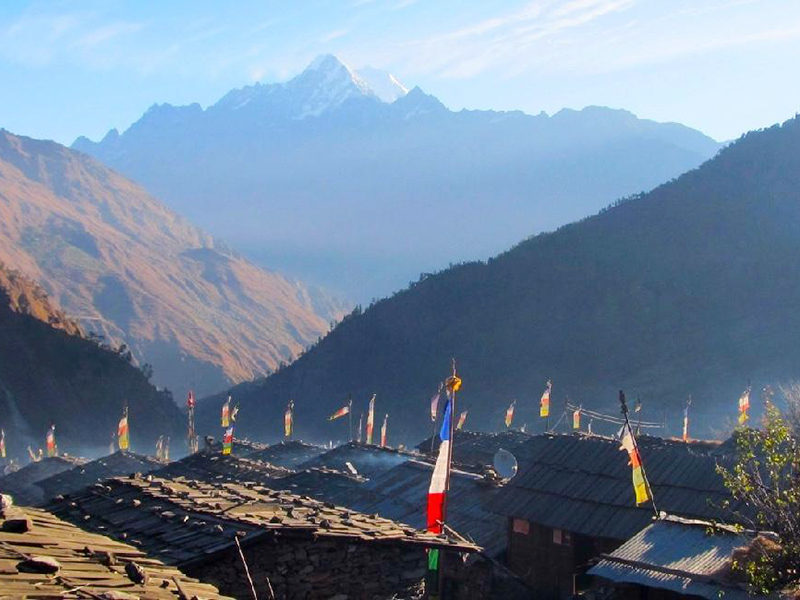
Langtang Gosainkunda Trek is considered as the best trekking route of Langtang valley. This trekking route offers us the panorama view of Langtang valley with golden dawn high mountains. Besides this we can see the lakes of Gosainkunda like Saraswoti kunda, Bhairab Kunda, Dudh Kunda, Chandra Kunda, Ama kunda etc. Maximum route of our trekking goes through Langtang National Park. Due to which we can see many types of flora and fauna which are playing on its own nature.
Some of the flora and fauna which are rare like musk deer, Himalayan thar, Himalayan black beer, snow leopard, wild goat, goral etc can be found in this area. While passing through the route of Langtang National Park we can also hear the melodious sounds of birds singing mixing with the sound of water fall.
From the view point of route we can see breath taking scenario of White Mountains like Annapurna, Manaslu, and Ganesh. Trekking over this region can be the best experience for one’s life.
Gosainkunda Lake, located in the Langtang region of Nepal, is a sacred alpine freshwater lake nestled at an altitude of about 4,380 meters (14,370 feet) in the Rasuwa District. Part of the Langtang National Park, it holds deep religious, cultural, and ecological significance. The lake and its surrounding area are not only popular among trekkers but also draw thousands of Hindu and Buddhist pilgrims annually.
Ancient Origins and Religious Significance
Gosainkunda’s history is rooted in ancient Hindu mythology. According to the Skanda Purana, a revered Hindu text, the lake was created by Lord Shiva. It is believed that during the cosmic event known as Samudra Manthan (churning of the ocean), Shiva drank the deadly poison halahala to save the universe. To cool his burning throat, he struck his trident (trishul) into the mountain, creating Gosainkunda.
As a result, the lake is considered a sacred site for Hindus, especially during the annual Janai Purnima festival (held in August), when thousands of pilgrims make the arduous journey to bathe in its holy waters, which they believe purify the soul and cleanse sins.
In addition to its Hindu significance, Gosainkunda is also revered by Buddhists, especially those following Tibetan and Tamang traditions. Local legends and oral histories blend Buddhist and Bonpo elements, seeing the lake as a dwelling of deities and spirits.
Cultural and Local Importance
The lake and surrounding region are home to the Tamang and Sherpa people, whose customs, dialects, and traditions are deeply tied to the spiritual landscape of Langtang. Locals often recount their own folk legends about the lake and the gods and spirits believed to inhabit it.
Nearby lakes such as Bhairab Kunda and Surya Kunda also hold spiritual importance, forming a cluster of sacred sites that have been pilgrimage destinations for centuries.
Historical Exploration and Conservation
Western awareness of the region began in the 19th and 20th centuries through explorers, surveyors, and eventually trekking enthusiasts. With the establishment of Langtang National Park in 1976, conservation efforts were introduced to protect the area’s rich biodiversity and cultural heritage. Gosainkunda is now part of a designated Ramsar Site, recognized for its ecological significance.
Despite a devastating earthquake in 2015, which heavily affected the Langtang region, Gosainkunda remains a vital symbol of spiritual resilience and natural beauty. Reconstruction and restoration efforts have helped revive trekking routes and pilgrimages.
Langtang Gosaikunda Lake Trek Permit
There are a few restricted areas of Nepal where you have to take a trekking permit. A trekking permit is required for all the trekking regions of Nepal which are issued by the Nepal government to keep some of the conservation areas neat, safe, and clean. These trekking permits are compulsory for trekking on this route and there are so many checkpoints where you have to show this permit. You have to pay an entry fee while entering a conservation area or a national park which is only for the restricted area.
We need two different trekking permits to trek in the Langtang region. If you pass through the Shivpuri national park then you have to pay an extra entrance fee if not then the number of permits is the same for all the trekkers.
When you leave for the trekking first of all you have to make sure that you should aware of the two different permits which are TIMS and Langtang National peak. And the cost of TIMS is Rs2000 per person and the National park cost is Rs3000 per person. For the permit, you have to show a photocopy of your passport and two passport-sized photos. You will get a trekking permit easily in the Kathmandu valley in the tourism board of Nepal and if you forget in the Kathmandu valley then you will get in Dhunche.
How to Get to Gosaikunda from Kathmandu
Travel from Kathmandu to Dhunche (By Road)
- Distance: ~117 km (73 miles)
- Travel Time: 6 to 8 hours (depending on road conditions)
- Options:
- Public Bus: Daily buses leave from Machhapokhari (near Balaju) in the early morning. Budget-friendly but basic and slow.
- Jeep Hire: Private or shared 4WD jeeps can be rented. Faster and more comfortable, ideal for small groups.
- Dhunche (1,950 m) is the starting point for the Gosaikunda trek and the administrative center of Rasuwa District.
Trip Itinerary
Outline Itinerary
- Day 01: Kathmandu Arrival and Check-in to the Hotel
- Day 02: Drive from Kathmandu to Syabrubeshi (1462m) – 8 Hours
- Day 03: Trek from Syabrubeshi to Lama Hotel (2500m) – 5 Hours
- Day 04: Trek from Lama Hotel to Langtang Village (3307) – 5 Hours
- Day 05: Trek from Langtang Village to Kyanjin Gompa (3798m) – 4 Hours
- Day 06: Explore around Kyanjin Gompa and Climb to TserkoRi
- Day 07: Trek from Kyanjin Gompa to GhodaTabela
- Day 08: Trek from GhodaTabela to Bamboo
- Day 09: Trek from Bamboo toThulosyabru
- Day 10: Trek from Thulosyabru to Singgompa
- Day 11: Trek from Singgompa to Goshaikunda
- Day 12: Trek from Goshaikunda to Dhunche
- Day 13: Drive back to Kathmandu from Dhunche
- Day 14: Final Departure
Details Itinerary
Day 01: Kathmandu Arrival and Check-in to the Hotel
After landing the flight at TIA, a representative of Tour Manager will warmly welcome you and will move towards the hotel arranged by Kingdom Treks & Expedition Pvt. Ltd We will enjoy a delicious dinner at night with a brief description of the upcoming trekking program to Langtang Gosainkunda trek.
- Accommodation: Hotel
Day 02: Drive from Kathmandu to Syabrubeshi (1462m) – 8 Hours
We start our 8 hours long drive to Syabrubeshi from Kathmandu today. On the way, we can witness the scenic foothills and ridgeline splendors to Syabrubeshi passing Dhunche. The beautiful glimpse of Ganesh Himal and terraced green hills along with the lush green forests will allure you during the drive. We check into the hotel upon reaching Syabrubeshi and stay overnight at lodge.
- Accommodation: Lodge
- Meals Include: Lunch & Dinner
Day 03: Trek from Syabrubeshi to Lama Hotel (2500m) – 5 Hours
Today will be the first day of our trekking. We follow the Langtang Kholariver and pass through the dense forest crossing several suspension bridges en route. We also pass by some tea houses and eventually reach Lama Hotel where we stay overnight at a lodge.
- Accommodation: Tea House
- Meals Include: Breakfast, Lunch & Dinner
Day 04: Trek from Lama Hotel to Langtang Village (3307) – 5 Hours
Today, we continue along the dense forests and then make a steady climb up through the valley. Leaving the tree line behind us, we walk further overlooking some of the marvelous views of Langtang Lirung. We finally arrive at Langtang village, where we stay overnight at a local guesthouse.
- Accommodation: Tea House
- Meals Include: Breakfast, Lunch & Dinner
Day 05: Trek from Langtang Village to Kyanjin Gompa (3798m) – 4 Hours
Today, it’s going to a shorter walk but it’s adequate for acclimatizing. Today, we will find some very interesting things to explore. You can explore some popular cheese factories in this beautiful valley situated at the lap of Langtang Lirung. We stay overnight at a lodge.
- Accommodation: Tea House
- Meals Include: Breakfast, Lunch & Dinner
Day 06: Explore around Kyanjin Gompa and Climb to TserkoRi (5150m)
We take our time this morning to explore the natural sceneries around Kyangin Gompa. And if you are interested, we will guide you to climb TserkoRi from where you can have some splendid views of mountains around. After that we visit Langtang Glacier and Langshikha which is beautiful yak pasture land. Finally, we get back to Kyangin Gompa for the overnight stay at the same lodge.
- Accommodation: Tea House
- Meals Include: Breakfast, Lunch & Dinner
Day 07: Trek from Kyanjin Gompa to Ghoda Tabela6-7 Hour
From Kyangin Gompa, we retrace our steps to Ghoda Tabela. You will enjoy the scenic and pleasant walking today. On reaching Ghoda Tabela, we check in to guesthouse to stay overnight.
- Accommodation: Tea House
- Meals Include: Breakfast, Lunch & Dinner
Day 08: Trek from GhodaTabela to Bamboo
Walking down through Lama Hotel and the forests of rhododendron along the Bhotekoshi River bank, we eventually reach Bamboo. We stay overnight at a lodge.
- Accommodation: Tea House
- Meals Include: Breakfast, Lunch & Dinner
Day 09: Trek from Bamboo to Thulosyabru
We continue retracing our stepssome of the way to Thulosyabru today. We ascend a steep path through the forests witnessing the beautiful views of Thulosyabru village with its extensive area of millet terraces.On reaching Thulosyabru, you will be able to catch the glimpses of Tamang life. We stay overnight at a lodge.
- Accommodation: Tea House
- Meals Include: Breakfast, Lunch & Dinner
Day 10: Trek from Thulosyabru to Singgompa
It’s going to be to a steep climb from Thulosyabru through the forest of oak and rhododendron to the top of a ridge. From the top, it’s only a short descent to Singgompa. We will explore the Buddhist Monastery in there. Don’t forget, Singgompa is also popular for local Cheese. We stay overnight at a local lodge.
- Accommodation: Tea House
- Meals Include: Breakfast, Lunch & Dinner
Day 11: Trek from Singgompa to Goshaikunda
From Singgompa, we ascend mountain flank with bare trees after having breakfast in the morning. We then cross the ridge and then pass through the forest full of mosses and ferns. As we reach to Lauribinayak, we can have some really spectacular views of Dhaulagiri, Ganesh Himal, Annapurna Range, and Langtang Lirung. Remember, this is going to be the best viewpoint for the entire trek. After crossing the ridge of SaraswatiKunda, you can witness the first view of the series of Lakes dedicated to different divinities. Actually, Goshaikunda is the third lake which is considered equally sacred to both Buddhists and Hindus. We stay overnight at tented accommodation.
- Accommodation: Tea House
- Meals Include: Breakfast, Lunch & Dinner
Day 12: Trek from Goshaikunda to Dhunche 6-7 hours
We trek back down direct to Dhunche today. We will be following the path between the forest and only few houses via Singgompa. On reaching Dhunche,we check in to the lodge and stay overnight at lodge.
- Accommodation: Tea House
- Meals Include: Breakfast, Lunch & Dinner
Day 13: From Dhunche drive to Kathmandu 5-6 hours
We drive back to Kathmandu today. It takes approx. eight hours to reach Kathmandu via Bus Drive. On reaching Kathmandu, you can take your time for last minute shopping. We celebrate the farewell dinner with our team tonight.
- Accommodation: Lodge
- Meals Include: Breakfast, Lunch and Dinner
Day 14: Final Departure
We are saying good bye to the Kathmandu as your journey in Nepal comes to an end today! We will transfer you to the airport for your returning flight.
Cost Details
Cost Includes
- Airport to hotel / Airport free transfer
- All Necessary Langtang Trekking Permit
- Kathmandu/Shybru Besi /Kathmandu by Local Express Bus or Local Jeep Share
- Meals: (Breakfast, Lunch and Dinner) During the trek
- Seasonable Fresh Fruit – Apple, banana etc
- All Lodge / tea house accommodation sharing basis
- Trekking Guide: An experienced, English speaking Trekking guide
- Trekking Porter – One Porter for 2 members- No Porter for solo trekkers
- Adventure Certificate, Company T-shirt
- Trek Equipment- Sleeping bag , duffel bag- refundable after trek
- Medical supplies (first aid kit will be available).
- All government taxes.
- Service charge.
Cost Excludes
- Hotel and Meals in Kathmandu
- Personal Travel Insurance and also rescue evocation encase of emergency
- All the hot and bottle of drinks, Hot shower, personal expenses
- Tips for guide
FAQ
What is the Langtang Gosainkunda Trek?
The Langtang Gosainkunda Trek is a moderate-to-challenging trek in the Langtang region of Nepal that takes you through beautiful valleys, rhododendron forests, and up to the sacred Gosainkunda Lakes (4,380 meters). It merges the Langtang Valley trek and Gosainkunda trail, offering a rich blend of nature, culture, and spiritual significance.
How long does the trek take?
Usually 10 to 14 days, depending on your pace and starting point. Some trekkers start from Syabrubesi and finish in Sundarijal, just outside Kathmandu.
What is the best time to trek to Gosainkunda?
- Best seasons: Spring (March–May) and Autumn (September–November)
- Monsoon (June–August): Rain and leeches, though the lakes look stunning post-rain.
- Winter (December–February): Snowy, cold, and passes may be blocked.
How difficult is the trek?
Moderate to strenuous, especially around the Lauribina La Pass (4,610 m). The elevation gain can be demanding, so proper acclimatization is essential.
What are the main highlights?
- Langtang Valley and Kyanjin Gompa
- Spectacular views of Langtang Lirung, Ganesh Himal, Manaslu, and Dorje Lakpa
- Sacred Gosainkunda Lakes (Hindu and Buddhist pilgrimage site)
- Lauribina La Pass
- Tamang and Sherpa culture
- Rhododendron and bamboo forests
- Wildlife: red panda, Himalayan tahr, langur monkeys
Do I need permits?
Yes, you’ll need:
- Langtang National Park Entry Permit
- TIMS Card (Trekkers’ Information Management System)
These can be obtained in Kathmandu or through a trekking agency.
Do I need a guide or porter?
- Solo trekking is allowed, but hiring a guide or porter is recommended for safety and local insights.
- During off-season or for the Lauribina La crossing, a guide is especially useful.
Are there lodges and tea houses along the way?
Yes. This is a tea house trek with plenty of accommodation and food options throughout, including Langtang Valley and the Gosainkunda region.
Is altitude sickness a risk?
Yes. You’ll cross 4,600 meters, so:
- Acclimatize properly
- Ascend gradually
- Stay hydrated
- Be aware of symptoms: headache, nausea, dizziness
What’s the starting and ending point of the trek?
- Starting point: Syabrubesi (drive from Kathmandu)
- Ending point: Either Dhunche, Sundarijal, or loop back to Syabrubesi
How do I get there from Kathmandu?
-
Bus or jeep from Kathmandu to Syabrubesi or Dhunche (~7–9 hours depending on road conditions)
What should I pack?
Essentials include:
- Layered clothing (for variable temperatures)
- Down jacket & sleeping bag (for colder nights)
- Rain gear
- Trekking poles
- Water purification tablets or filter
- Sunscreen, hat, sunglasses
- First aid kit
Is there electricity and mobile signal?
- Most tea houses offer electricity (sometimes solar-powered, small fee for charging)
- Mobile signal is available in lower villages; patchy at higher elevations
Can I trek to Gosainkunda for the Janai Purnima festival?
Yes! Janai Purnima (August) is a sacred time when thousands of Hindu and Buddhist pilgrims visit Gosainkunda. It’s crowded but culturally fascinating.
Is the trek safe for solo female travelers?
Generally, yes. The Langtang region is popular, and tea houses are welcoming. Still, solo trekkers (especially women) should follow standard safety practices, or consider hiring a local female guide.
Route Map
Gallery




Client Reviews
JoJo
Mar 2026 • Friends
Brilliant guide! Super friendly, funny and accommodating. Consider going back to Nepal almost because of him and not because of the mountains.
Julie
Date of experience: October 2025
Elias W
Megh is a very professional, funny guide who knows how to lead groups with empathy. I always felt very comfortable and safe because you can tell he’s been doing this job for a long time.
I can wholeheartedly recommend him for any tour.

Jerry S
If you are looking for a fulfilling and exciting trekking experience in the Himalayas, I highly recommend securing the services of Megh Gurung and Kingdom Treks.
I have twice joined teams that Megh guided to Poon Hill in the Annapurna Range, and both times I was amazed by the breathtaking beauty of the mountains, and by Megh’s outstanding service and attention to detail. An extra benefit is his wit, humor, and warm personality. Megh leadership made both treks memorable, fun, and truly unforgettable. You can’t go wrong choosing Kingdom Treks.

Cäoud cloudthes
Great trip! Megh and Sammy took care of everything. From food, to logistics, to accommodation. Couldn’t have been better.

Bill Steinmetz
Looking back, the entire trip was amazing but also challenging because of the altitudes and climbing involved. We all did make it.
Everything was taken care of for us in terms of arrangements and airport transfers. Our guide Megh met us at the airport in Kathmandu, arranged our lodging, meals, flights to and from Lukla, shopping for gear extras in town. All our lodging on the trips was also reserved for us. Meals were all served in the lodges. Megh was on the trek with us along with porters who took our gear. We carried day packs.You should plan 3 weeks minimum for this trip and it will require at least 2 days acclimatization. If I remember correctly, as we got higher, we may have as much as 9 days above 14,000 ft and with that, peaks still rose around us another 4-5 thousand feet if not more. You also should to be in condition for this trek. I also had mild altitude sickness at base camp but did not need intervention. So it is recommended that you learn as much as possible about how to prepare for a trek like this. But the rewards may be well worth it, as some of our photos may illustrate.Consider adding more days for touring in Kathmandu or even for a visit to India on the way home like we did (also arranged by Megh)

Nesrin B
Megh is a great guide, reliable and understanding. He was very helpful to my friend Havva and me during the Annapurna Base Camp trek. He is also fun and interesting. If you travel with Megh, you will be satisfied.

PMR5511
I had an absolutely incredible experience with Kingdom Treks, a top-notch trekking company in Nepal that made my Himalayan adventure unforgettable! Megh and their team delivered a perfectly organized, culturally immersive, and awe-inspiring journey that exceeded all expectations. As someone new to high-altitude trekking, I felt reassured by their focus on safety and flexibility gave me confidence throughout the journey. Megh was phenomenal—knowledgeable, warm, and always ready with fascinating insights about Nepalese culture and the landscapes we explored. Megh’s team, including the hardworking porters, went above and beyond, ensuring we had comfortable teahouse accommodations with hearty meals and jaw-dropping mountain views. Highly Recommend!

REAL INDIA
We had an absolutely incredible experience with Kingdom Trek company in Nepal , Brother Megh is a great guide and a good leader , We enjoyed the trip with this company , always appreciate their efforts, GOD Bless them

Marissa E
As a Canadian female, I’ve trekked with Megh on two trips to Nepal. When we met the first time, I came with a trekking group, we instantly clicked and I now call him “my Nepali dad”. Which he embodies for everyone–he is kind, honest, genuine, and of course, a pro at leading any kind of trek (and making it fun). I went back again a few years later by myself and Megh went above and beyond–picked me up from the airport and helped me navigate busy Kathmandu and Mt. Everest base camp as a solo female. He’s become a lifelong friend of over a decade now, we still keep in touch! If you want a professional who’s been in the game for many years, and someone you can genuinely trust, trek with Megh!