


Megh is a wonderful guide who gave us an amazing 14 day trek and sightseeing trip to a festival and world heritage sites in Kathmandu. Megh is very knowledgeable and shared cultural, wildlife, and other pertinent information with us. His team of porters were great!
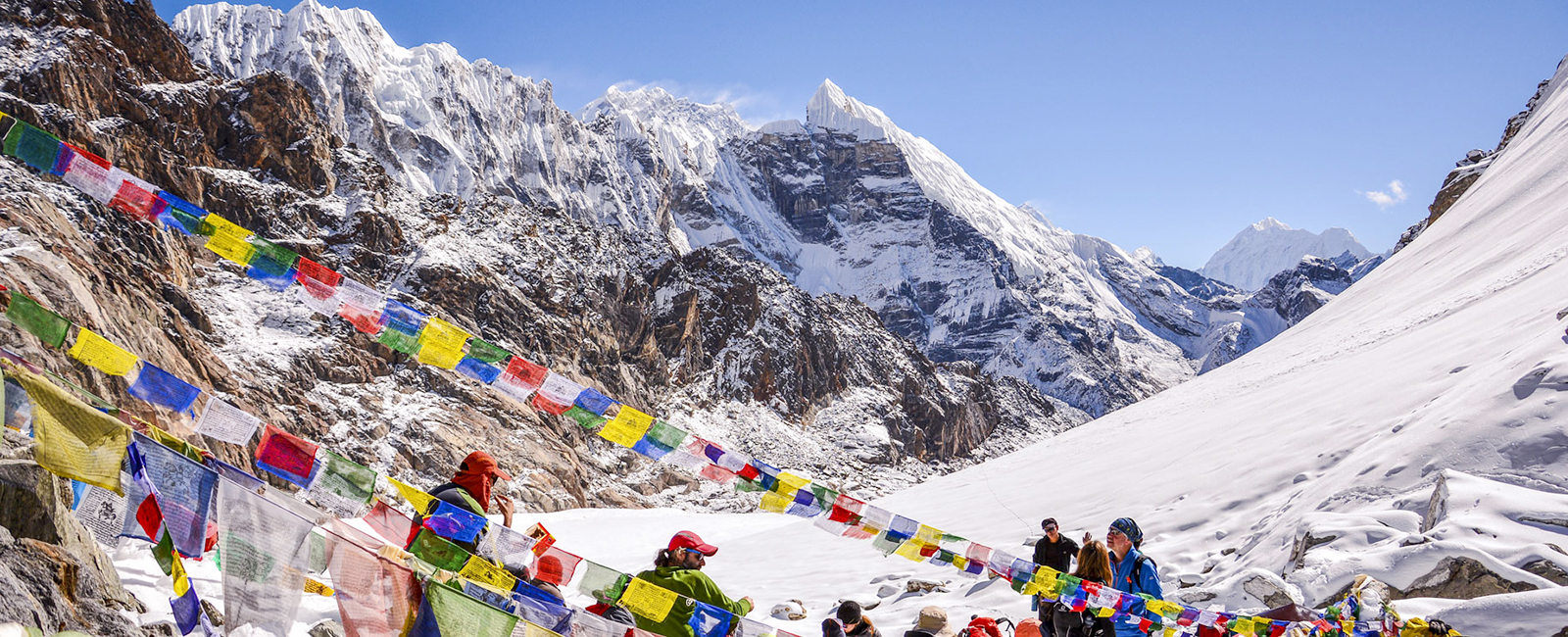
Crossing the Legendary Cho La Pass Trek and Everest Base Camp
Everest Chola Pass Trek is Challenging high Pass over 5000m Between Gokyo and Everest Base Camp. This is the most adventurous and thrilling trekking in the Everest region which offers a unique experience walking through the Adventure and High Passes with the beautiful sceneries all over the trekking trail. You will collect lifetime memory during trekking with the beautiful mountain, lush forest, unique culture of Sherpa tribes, and crossing high passes that provides divine pleasure to the visitor.
The trek is one of the well-known trekking trails in the Everest region. You will have an opportunity to look at two beautiful glaciers which is the Khumbu glacier in EBC and Nazumpa glacier in the Gokyo valley.
Chola Pass Trek is a beautiful journey towards the home of the Sherpa people. For the adventurous trekker, it is a superb opportunity that offers the views of Gokyo Ri and Kala Patthar. You are going to visit many beautiful places in the Khumbu region on this trekking route.
We will visit one of the largest Buddhist monasteries in this area. The famous route of the Khumbu region leads us through the Sagarmatha national park with the variety of flora, and fauna, infrequent wild animals, and the sparkling views of the mountain. Trek in this route takes through the lush forest of rhododendron and pine forest, across a waterfall, and through grassland, and Buddhist flags.
Everest Chola Pass Trekking permit
Trekking permit and TIM card in the most essential things for trekking and without a trekking permit you cannot get permission to enter here. Local governments have forbidden all the area. This area is located in the Sagarmatha national park which is why you have to take Permit. For a permit card, there is nothing difficult just you have to give a photocopy of your passport and two passport-sized photos. You will easily get permits at the entrance of the Khumbu region. You will also get a trekking permit. Altogether you have to take 3 trekking permits as TIMS Card, National Park Permit and Local RM Card.
Best Time to Do Everest Gokyo Lake Trek
The Everest Gokyo Lake Trek is a stunning journey through the heart of the Himalayas, combining serene alpine lakes, traditional Sherpa villages, and breathtaking views of some of the world’s tallest peaks. Choosing the right time to trek is crucial to fully enjoy the experience, and two seasons stand out as the best: spring and autumn.
Spring (March to May): A Season of Color and Clarity
Spring is one of the most ideal times to do the Gokyo Lake Trek. As the snow melts and the trails become more accessible, the landscape bursts into color with blooming rhododendrons and wildflowers. The weather is generally stable, with clear skies offering panoramic views of Mount Everest, Cho Oyu, Lhotse, and Makalu. Daytime temperatures are comfortable for hiking, though it still gets chilly at night in higher altitudes. This season also marks the beginning of the climbing season, adding a vibrant energy to the region.
Autumn (September to November): The Golden Window
Autumn is another peak season for the Gokyo trek, known for its crisp air and flawless visibility. After the summer monsoon, the air is clean and fresh, and the skies are at their clearest. The trails are dry and safe, and the daytime temperatures are moderate—perfect for long hiking days. Autumn also offers spectacular sunsets over the Himalayas and a chance to experience local festivals like Mani Rimdu in Tengboche.
Winter (December to February): Quiet, But Cold
Trekking during winter is possible, and the views are still incredible—often framed by snow-dusted peaks and frozen lakes. However, the temperatures drop significantly, especially at night, and the high passes like Cho La Pass may be closed due to snow. It’s a quieter time on the trail, ideal for those seeking solitude and adventure in a rugged environment—but only recommended for experienced trekkers prepared for cold conditions.
Monsoon (June to August): Not Ideal
The monsoon season brings heavy rain to the lower regions, making the trails muddy and prone to landslides. In the higher regions, clouds often obscure the mountain views that are a highlight of the trek. While some experienced trekkers venture out during this season to avoid crowds, it is generally considered the least favorable time for this route.
How Difficulty is Everest Chola Pass Trek?
Geographically, this is the most challenging trekking route in the Everest region. This is a very serious adventure with its high pass crossing where you will step at the base camp of the top of the world along with the Kala Pattar hike with exciting challenges. You have to walk for nearly half an hour over the iced trails which have many chances to have altitude sickness. It will be best if you travel during the month to complete the task with less difficulty. For trekking, you have good physical fitness, and health is required to go.
Trip Itinerary
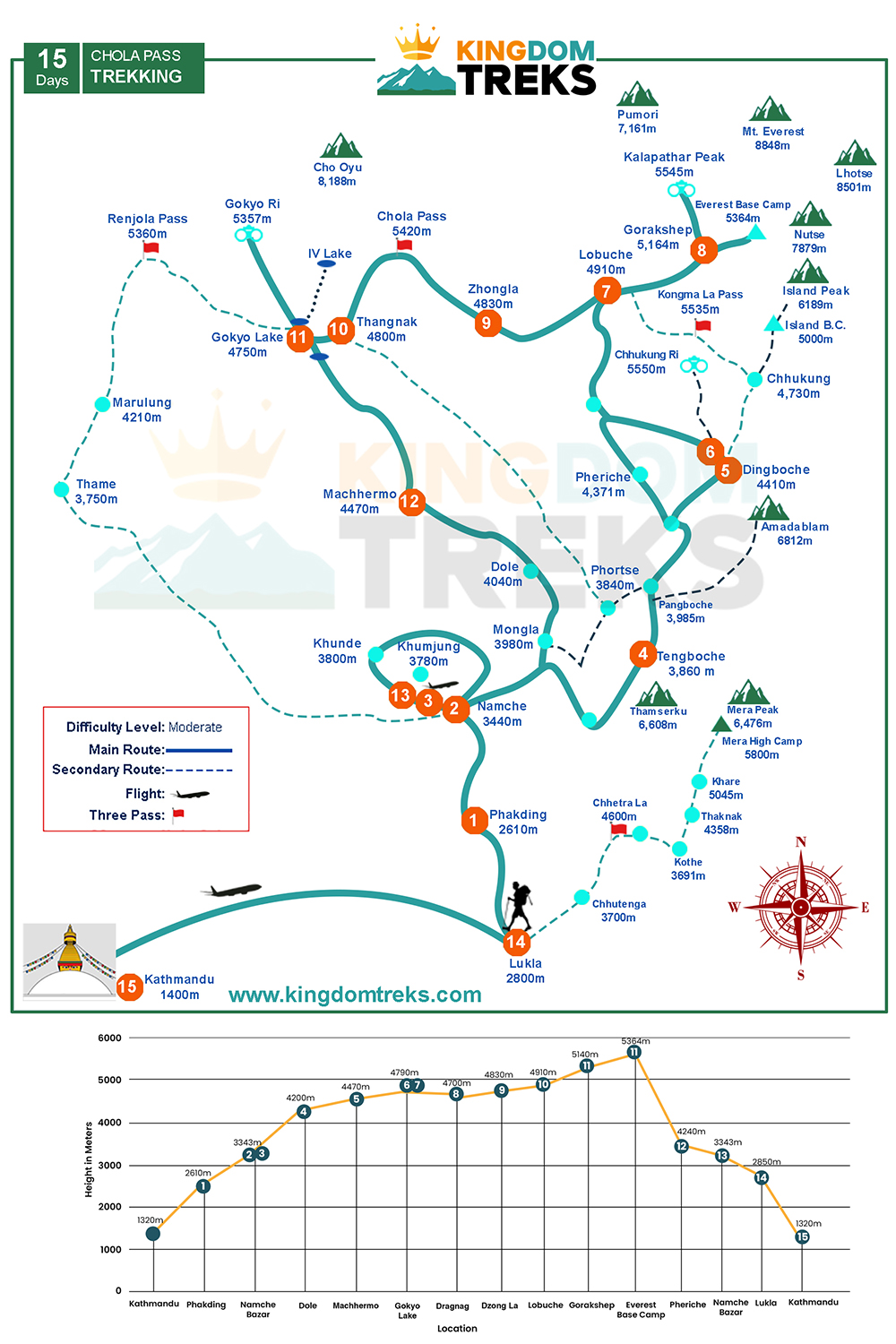
Outline Itinerary
- Day 01: Arrival in Kathmandu and check-in to Hotel
- Day 02: Fly from Kathmandu to Lukla (2840m) and trek to Phakding (2610m) – 3 Hours
- Day 03: Trek from Phakding to Namche Bazaar (3441m) – 5 Hours
- Day 04: Acclimatization at Namche Bazaar
- Day 05: Trek from Namche to Dole (4110m) – 6 Hours
- Day 06: Trek from Dole to Machhermo (4470m) – 5 Hours
- Day 07: Trek from Machhermo to Gokyo (4800m) – 5 Hours
- Day 08: Acclimatization at Gokyo Valley
- Day 09: Trek to Gokyo Ri (5357m) and to Thaknak(4750m)–5 Hours
- Day 10: Trek from Thaknak to Chola Pass (5367m) to Dzongla (4830m) – 8 Hours
- Day 11: Trek from Dzongla to Lobuche (4940m) – 3 Hours
- Day 12: Trek from Lobuche to Gorakshep (5170m) to Everest Base Camp (5364m) and return back to Gorakshep – 8 Hours
- Day 13: Trek from Gorakshep to Kalapatthar to Pheriche (4280m) – 8 Hours
- Day 14: Trek from Pheriche to Tyangboche and then to Namche (3400m) – 6 Hours
- Day 15: Trek from Namche to Lukla– 7 Hours
- Day 16: Flight from Lukla to Kathmandu
- Day 17: Final Departure
Details Itinerary
Day 01: Arrival in Kathmandu and check-in to Hotel
The representatives from Kingdom Trek & Expedition Ptd. Ltd. will welcome you at Tribhuvan International Airport upon your arrival. He/she Assist to transfer you to the hotel for the overnight stay.
- Accommodation: Hotel
Day 02: Fly from Kathmandu to Lukla (2804m) and trek to Phakding (2610m) – 3 Hours
We get transferred to the domestic terminal of Kathmandu Domestic Airport this morning to catch our scheduled morning flight to Lukla. After 30 minute long adventurous flight above the breathtaking scenario of Himalayas, we land on the Tenzing-Hillary Airport at Lukla. Lukla is going to be the starting point of our trek. We meet our porters and other crew members and start trekking towards Phadking, which takes around three hours. We stay overnight at a local guesthouse.
- Accommodation: Lodge
- Meals Include: Lunch & Dinner
Day 03: Trek from Phakding to Namche Bazaar (3441m) – 5 Hours
We walk through the beautiful forest of pine today. And our walk leads us along the Dudhkoshi River bank through many suspension bridges. We will be crossing Hillary Suspension bridge which is one of the famous suspension bridges in that region. We will have enough opportunity to witness the wonderful views of Mount Thamserku (6618m) during the walk. Passing through the settlements of Benkar and Monjo, we eventually arrive at the entrance to the Sagarmatha National Park. We still have a last village of Jorsale before reaching Namche. Following the trail ascending through the forests and bridges and overlooking the beautiful views of Mount Everest, Lhotse and Nuptse, we continue our journey towards Namche. Namche is the gateway to Mount Everest and is also the main trading center of the region. We check into the guesthouse and stay there overnight lodge.
- Accommodation: Lodge
- Meals Include: Breakfast, Lunch & Dinner
Day 04: Acclimatization at Namche Bazaar
Today is going to be a rest day at Namche. But, as our Health Experts suggest, we need to stay active and moving during the rest days instead of being idle. Hence, we either take a day hike to Thame or visit Khunde for purpose of proper acclimatization. We can even stay at Namche and explore the Bazaar itself. You can visit the Tourist Visitor Center near the Headquarter of Sagarmatha National Park where you can observe an assortment of things which are related to the First Everest Climbers and Sherpa Culture. We stay overnight at a lodge.
- Accommodation: Lodge
- Meals Include: Breakfast, Lunch & Dinner
Day 05: Trek from Namche to Dole (4110m) – 6 Hours
Today, we climb steeply out of Namche Bazaar up to the Kyangjuma villagefrom where we can enjoy outstanding views of Thamserku and Amadablam. We pass through Mong La and stop at its top to enjoy the grandstanding views of surrounding snowcapped mountains and valleys while we have our lunch. We will get chance to observe various flora and fauna including wildflowers and rhododendrons. We finally reach Dole, where we stay overnight at lodge.
- Accommodation: Lodge
- Meals Include: Breakfast, Lunch & Dinner
Day 06: Trek from Dole to Machhermo (4470m) – 5 Hours
From Dole, we head towards Machhermo today. Our trail is not going to be that strenuous and you will have opportunity to enjoy the amazingly spectacular natural beauty on the way. You can also observe the excellent views of mountains including Cho Oyu, Kantega and Thamserku.We reach at Machhermo after the walk of about five hours. We stay overnight at lodge.
- Accommodation: Lodge
- Meals Include: Breakfast, Lunch & Dinner
Day 07: Trek from Machhermo to Gokyo (4800m) – 5 Hours
From Machhermo, we move onwards along various lakes on the way. Continuing gradually uphill, we reach Gokyo for our lunch. We stay overnight at the camp at lodge.
- Accommodation: Lodge
- Meals Include: Breakfast, Lunch & Dinner
Day 08: Acclimatization at Gokyo Valley
We will have a full rest day or an acclimatization day at Gokyo. We can grasp the opportunity to observe ThonakTsho (the Fourth Lake) and NgozumaTsho (the Fifth Lake). The interested ones can even climb on a hill at the edge of the lakes to get the astounding views of great peaks including Mount Everes, Cho Oyu, Lhotse, Gyachung, Makalu and Nuptse. We can witness the fabulous views of Cho Oyu Base Camp and Ngazumpa Glacier (the biggest glacier in the world) from the northern part of the fifth lake. We stay overnight at lodge.
- Accommodation: Lodge
- Meals Include: Breakfast, Lunch & Dinner
Day 09: Trek to Gokyo Ri (5357m) and to Thaknak (4750m) – 5 Hours
Today, we hike up to Gokyo Ri for our ultimate goal to see the wonderful views of Himalayas including Mount Everest. If the weather is fine, you can spend few hours at the top of Gokyo Ri. We then descend to Thaknak where we stay overnight at lodge.
- Accommodation: Lodge
- Meals Include: Breakfast, Lunch & Dinner
Day 10: Trek from Thaknak to Chola Pass (5367m) to Dzongla (4830m) – 8 Hours
Cho La pass is another show up for this Trek and today is going to be the toughest day for us. We have to start early in the morning. Actually the pass is not difficult in itself but it is steep and involves a glacier traverse on the eastern side. So, we need to be careful this day. The awesome views of Amadablam over a range of mountains on the south along with Cholatseon the west and Lobuche East and Baruntsecan be enjoyed. We then trek to Dzonglawhich is another beautiful place with a complete view of Cholatse, Amadablam, and Lobuche. We stay overnight at a very basic lodge.
- Accommodation: Lodge
- Meals Include: Breakfast, Lunch & Dinner
Day 11: Trek from Dzongla to Lobuche (4940m) – 3 Hours
Today’s walk is going to be a bit shorter relatively. We would get more time to observe and relax as we climb down from Dzongla to Lobuche. The panoramic views of Lobuche, Amadablam, Thamserku and Kangtegaon the way can allure anyone. We stay overnight at lodge.
- Accommodation: Lodge
- Meals Include: Breakfast, Lunch & Dinner
Day 12: Trek from Lobuche to Gorakshep (5170m) to Everest Base Camp (5364m) and return back to Gorakshep – 8 Hours
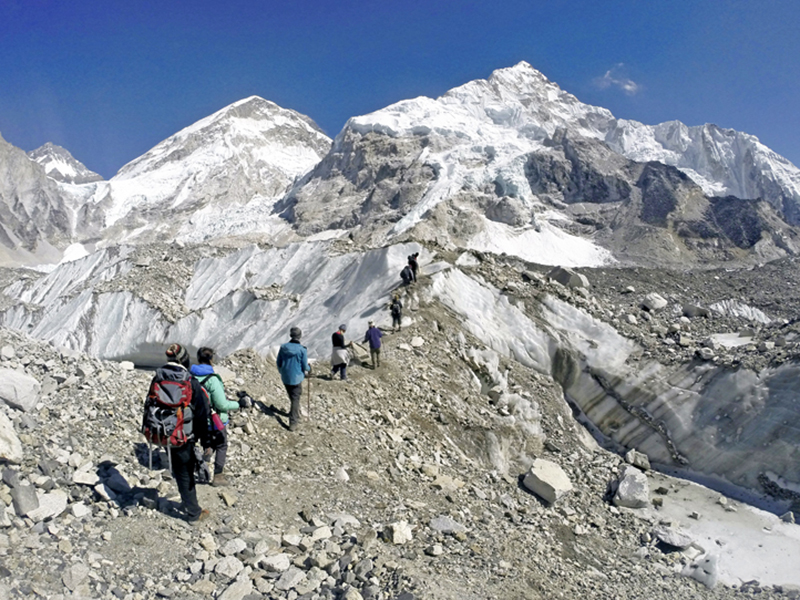
Today is going to be another big and difficult day trek along the Khumbu Glacier and up to the Everest Base Camp. You can get the closest view of Mount Everest from Khumbu Glacier and EBC. After spending little time at EBC, we track back to Gorakshep, where we stay overnight at lodge.
- Accommodation: Lodge
- Meals Include: Breakfast, Lunch & Dinner
Day 13: Trek from Gorakshep to Kalapatthar to Pheriche (4280m) – 8 Hours
Actually, this day is going to be one of the most difficult yet rewarding treks. We make an early start to reach the best viewpoint of Kalapatthar. You can get the amazing mountain panorama from this viewpoint. After enjoying the amazing views from Kalapatthar, we return back to Pheriche. We stay overnight at a lodge.
- Accommodation: Lodge
- Meals Include: Breakfast, Lunch & Dinner
Day 14: Trek from Pheriche to Tyangboche and then to Namche (3400m) – 6 Hours
From Pheriche, we take slightly different route down to Orsho today. We reach Pangboche where you can explore the oldest monastery in the region. The monastery is said to contain the scalp and bones of abominable snowman Yeti. We leave Tyangboche Monastery and finally arrive at Namche. We stay overnight at a lodge.
- Accommodation: Lodge
- Meals Include: Breakfast, Lunch & Dinner
Day 15: Trek from Namche to Lukla – 7 Hours
From Namche, we return back to Lukla. With this, we mark end of our trekking. We stay overnight at lodge.
- Accommodation: Lodge
- Meals Include: Breakfast, Lunch & Dinner
Day 16: Flight from Lukla to Kathmandu
We get the scheduled morning flight to Kathmandu from Lukla. The flight is going to be very scenic and adventurous. On arriving Kathmandu, you can take your time to go for your last minute shopping or you can choose to explore the city even more. We stay overnight at a hotel.
- Accommodation: Hotel
- Meals Include: Breakfast
Day 18: Final Departure
We are saying good bye to the Kathmandu as your journey in Nepal comes to an end today! We will transfer you to the airport for your returning flight.
Cost Details
Cost Includes
- Airport to Hotel / Airport pick up & drop by private vehicle.
- Two-night hotel in Kathmandu with breakfast.
- An extra baggage storage facilities in Kathmandu during the trek at your hotel or office.
- Your entire stander Meals (breakfast, lunch and dinner) during the trek, A Cup of Tea/ Coffee During the Breakfast.
- Tea House hotel accommodation during the trek. Attached bathroom Namche and Lukla.
- A highly experienced, helpful and friendly government,license holder Guide, his food, accommodations, salary, insurance, equipment, and medicine etc.
- Round Trip flight fare Kathmandu / Ramechap – Lukla-Ramechap /Kathmandu for member and Guide as per availability and a
- irlines policy. Sharing transport will be provided if flight diverted into the Ramechap Airport.
- Medical supplies, first aid kit box, including Oximeter and pulse meter checker.
- An arrangement of Emergency Helicopter service (Pay first and claim later with your insurance if policy cover. ). If in case of worst case only.
- Sleeping bag, down Jacket, Duffel bag and walking Poles (if you don’t have your own, To be returned after trip completed).
- Sagarmatha National Park permits.
- TIMS (trekkers’ information management System.)
Cost Excluds
- International airfare, Nepal visa fee, any kind of insurance
- Local Expert Porter
- All meals and accommodation in Kathmandu
- expenses during the trekking such as hot shower, all kind of drinks, extra meals, Wi-Fi or data, device charging, upgraded accommodation etc..
- Tips for Staffs (it is expected)
FAQ
What is the Everest Chola Pass Trek?
The Everest Chola Pass Trek is an adventurous trekking route in the Everest region of Nepal that combines the classic Everest Base Camp route with a challenging crossing of the high-altitude Cho La Pass (5,420 m / 17,782 ft), along with a visit to the beautiful Gokyo Lakes and Gokyo Ri.
How difficult is the trek?
The trek is moderately to highly challenging, primarily due to:
- High altitude (above 5,000 meters)
- The technical and steep ascent/descent of Cho La Pass
- Long walking days
- Unpredictable weather
Previous high-altitude trekking experience and good physical fitness are strongly recommended.
How long does the trek take?
Typically, the trek takes around 15–17 days, depending on your itinerary and acclimatization days. A common route includes:
- Lukla to EBC (via Namche, Tengboche, Dingboche)
- Cho La Pass crossing
- Gokyo Lakes and Gokyo Ri ascent
- Return to Lukla via Dole and Namche
When is the best time to do the Chola Pass Trek?
The best seasons are:
- Spring (March to May): Clear skies, blooming rhododendrons, warmer temperatures
- Autumn (September to November): Excellent visibility, stable weather, peak trekking season
Winter (Dec–Feb) and monsoon (Jun–Aug) are less ideal due to snow on the pass and poor visibility.
Is a guide or porter necessary?
While the trek can be done independently by experienced trekkers, hiring a licensed guide and/or porter is strongly recommended, especially for crossing Cho La Pass, where trail conditions can change rapidly and navigation may be difficult in snow or fog.
Do I need any permits?
Yes, you will need:
- Sagarmatha National Park Permit
- Khumbu Pasang Lhamu Rural Municipality Permit
These can be obtained in Kathmandu or in Lukla.
What kind of accommodation is available?
The trek is a teahouse trek, meaning you’ll stay in basic lodges that offer:
- Private or shared rooms
- Common dining areas
- Simple meals (dal bhat, noodles, etc.)
Amenities become more basic as you ascend.
Is altitude sickness a risk?
Yes. Acute Mountain Sickness (AMS) is a serious risk above 3,000 meters. To reduce the risk:
- Ascend gradually
- Include rest and acclimatization days (e.g., Namche and Dingboche)
- Stay hydrated
- Know the symptoms (headache, nausea, dizziness)
How do I prepare for the trek?
- Engage in cardio training (hiking, running, cycling) for at least 2–3 months prior
- Do strength training for legs and core
- Practice hiking with a backpack
- Take short high-altitude treks if possible
What should I pack?
Essential gear includes:
- Sturdy trekking boots
- Warm clothing (layers)
- Down jacket and sleeping bag (rated for -10°C or lower)
- Trekking poles
- Water purification tablets
- First aid kit
- Headlamp, gloves, sunglasses, sunblock
Is travel insurance required?
Yes. You must have travel insurance that includes:
- High-altitude trekking coverage (up to 6,000 m)
- Emergency medical evacuation (e.g., helicopter rescue)
Can I charge my electronics and access Wi-Fi?
Yes, but with limitations:
- Charging and Wi-Fi are available in most teahouses for a small fee
- Connectivity and power sources become scarce at higher altitudes
Is the Cho La Pass always open?
Not always. The pass may be closed due to heavy snowfall, ice, or landslides, especially in winter or early spring. Check with local guides or agencies for current conditions.
Is it safe to trek solo?
While solo trekking is legal, the Cho La Pass can be risky without a guide. It’s safer to trek with others or hire a guide, especially in remote or hazardous areas.
What are some highlights of the trek?
- Everest Base Camp
- Gokyo Lakes and Gokyo Ri (panoramic view of Everest, Lhotse, Makalu, Cho Oyu)
- Crossing Cho La Pass
- Khumbu Glacier and Ngozumpa Glacier
- Tengboche Monastery
- Sherpa villages and culture
Route Map
Gallery


Client Reviews
JoJo
Mar 2026 • Friends
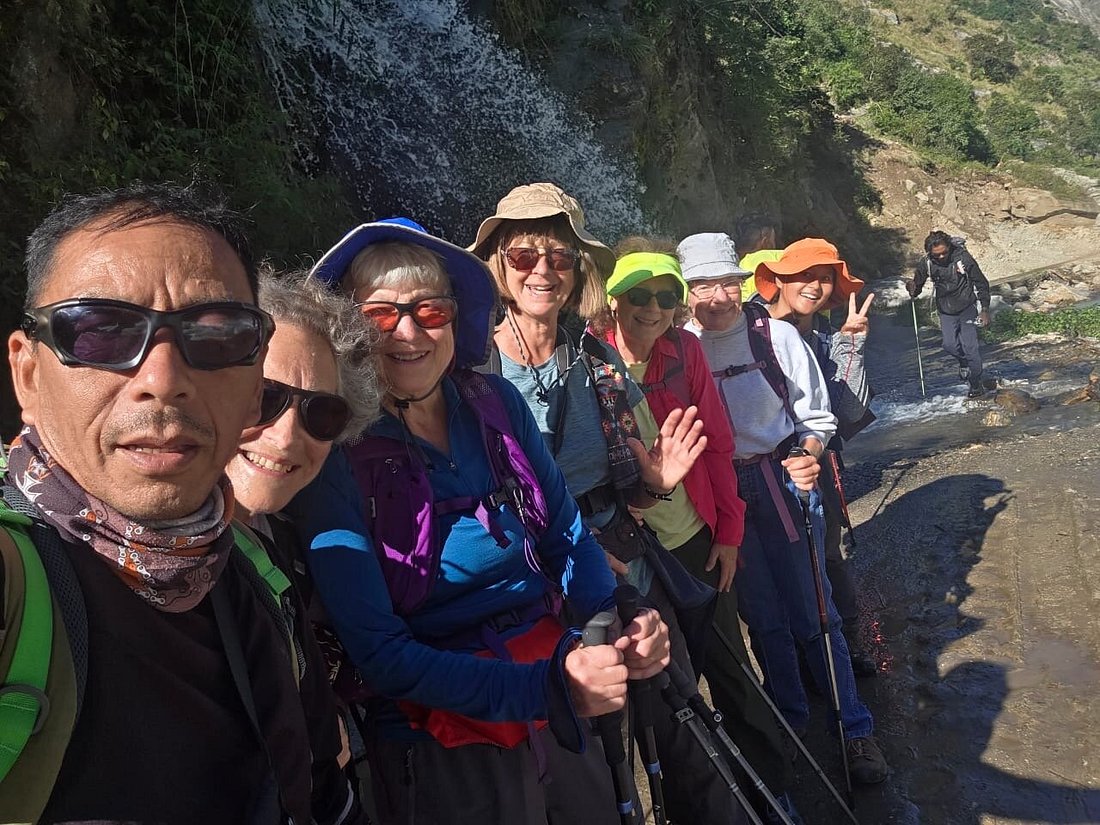
Brilliant guide! Super friendly, funny and accommodating. Consider going back to Nepal almost because of him and not because of the mountains.
Julie
Date of experience: October 2025
Elias W
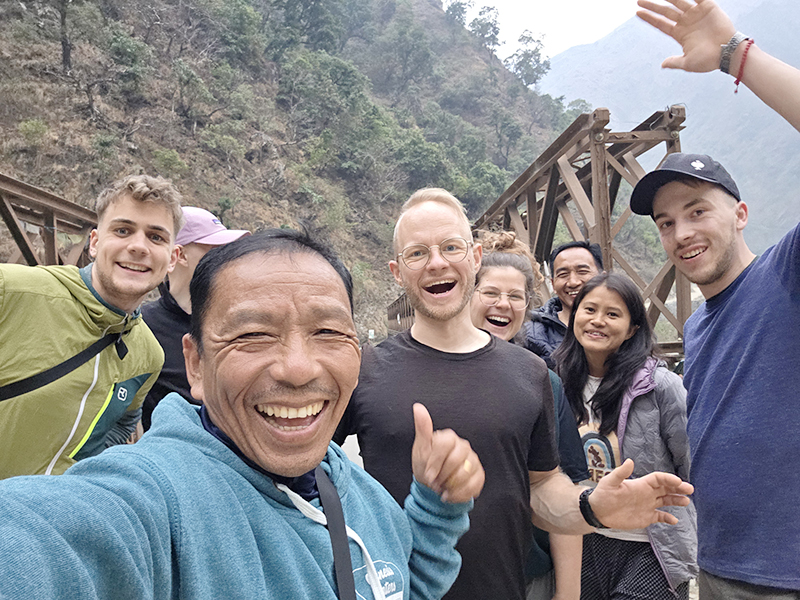
Megh is a very professional, funny guide who knows how to lead groups with empathy. I always felt very comfortable and safe because you can tell he’s been doing this job for a long time.
I can wholeheartedly recommend him for any tour.

Jerry S
If you are looking for a fulfilling and exciting trekking experience in the Himalayas, I highly recommend securing the services of Megh Gurung and Kingdom Treks.
I have twice joined teams that Megh guided to Poon Hill in the Annapurna Range, and both times I was amazed by the breathtaking beauty of the mountains, and by Megh’s outstanding service and attention to detail. An extra benefit is his wit, humor, and warm personality. Megh leadership made both treks memorable, fun, and truly unforgettable. You can’t go wrong choosing Kingdom Treks.

Cäoud cloudthes
Great trip! Megh and Sammy took care of everything. From food, to logistics, to accommodation. Couldn’t have been better.

Bill Steinmetz
Looking back, the entire trip was amazing but also challenging because of the altitudes and climbing involved. We all did make it.
Everything was taken care of for us in terms of arrangements and airport transfers. Our guide Megh met us at the airport in Kathmandu, arranged our lodging, meals, flights to and from Lukla, shopping for gear extras in town. All our lodging on the trips was also reserved for us. Meals were all served in the lodges. Megh was on the trek with us along with porters who took our gear. We carried day packs.You should plan 3 weeks minimum for this trip and it will require at least 2 days acclimatization. If I remember correctly, as we got higher, we may have as much as 9 days above 14,000 ft and with that, peaks still rose around us another 4-5 thousand feet if not more. You also should to be in condition for this trek. I also had mild altitude sickness at base camp but did not need intervention. So it is recommended that you learn as much as possible about how to prepare for a trek like this. But the rewards may be well worth it, as some of our photos may illustrate.Consider adding more days for touring in Kathmandu or even for a visit to India on the way home like we did (also arranged by Megh)

Nesrin B
Megh is a great guide, reliable and understanding. He was very helpful to my friend Havva and me during the Annapurna Base Camp trek. He is also fun and interesting. If you travel with Megh, you will be satisfied.

PMR5511
I had an absolutely incredible experience with Kingdom Treks, a top-notch trekking company in Nepal that made my Himalayan adventure unforgettable! Megh and their team delivered a perfectly organized, culturally immersive, and awe-inspiring journey that exceeded all expectations. As someone new to high-altitude trekking, I felt reassured by their focus on safety and flexibility gave me confidence throughout the journey. Megh was phenomenal—knowledgeable, warm, and always ready with fascinating insights about Nepalese culture and the landscapes we explored. Megh’s team, including the hardworking porters, went above and beyond, ensuring we had comfortable teahouse accommodations with hearty meals and jaw-dropping mountain views. Highly Recommend!

REAL INDIA
We had an absolutely incredible experience with Kingdom Trek company in Nepal , Brother Megh is a great guide and a good leader , We enjoyed the trip with this company , always appreciate their efforts, GOD Bless them

Marissa E
As a Canadian female, I’ve trekked with Megh on two trips to Nepal. When we met the first time, I came with a trekking group, we instantly clicked and I now call him “my Nepali dad”. Which he embodies for everyone–he is kind, honest, genuine, and of course, a pro at leading any kind of trek (and making it fun). I went back again a few years later by myself and Megh went above and beyond–picked me up from the airport and helped me navigate busy Kathmandu and Mt. Everest base camp as a solo female. He’s become a lifelong friend of over a decade now, we still keep in touch! If you want a professional who’s been in the game for many years, and someone you can genuinely trust, trek with Megh!