


Megh is a wonderful guide who gave us an amazing 14 day trek and sightseeing trip to a festival and world heritage sites in Kathmandu. Megh is very knowledgeable and shared cultural, wildlife, and other pertinent information with us. His team of porters were great!

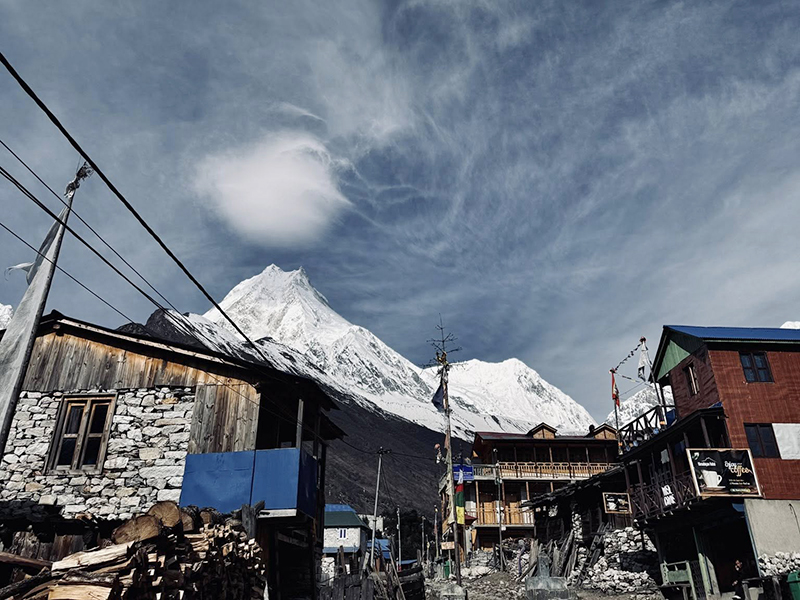
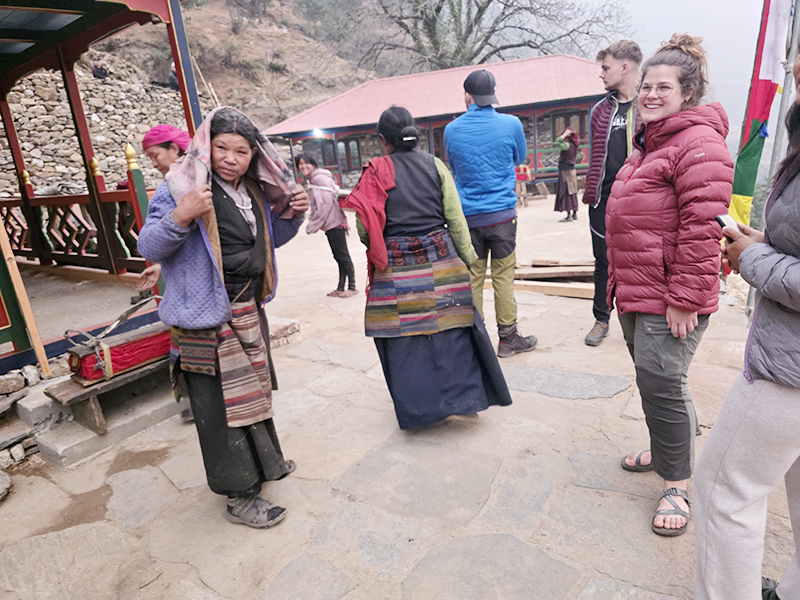
Langtang Valley Trek is delightful trekking trails which are going through Tamang heritage culture, a typical village lifestyle, dominated by Tamang culture. It offers a majestic view of the mountain with a wide landscape. The trek captures all the best Himalayan trekking with stunning scenery and the tradition and culture of local tribes. Mostly Tamang people are seen on this trekking route and we have an opportunity to know nearly about the culture and traditions of Tamang people.
With the culture and religious costume of Tamang, we also pass through georgic mountain communities and traditional platform farms. This trek offers pine woodland forest, mountain views, lush green slopes, and an overall enjoyable experience.
Langtang Valley Trek is one of the most adventurous trekking which near Kathmandu valley. The trek also offers the wonderful experience of witnessing the ancient culture and their warm hospitality. We will take a road trip from Kathmandu valley towards Sybrubesi where we will have the opportunity to see the natural beauty of Nepal. Trekking on this route provides you the perfect opportunity to observe the beautiful glacier and snow-capped mountain.
We will have an opportunity to explore inside the Langtang national park too which is very much rich in biodiversity, flora, fauna, and wildlife which is rare all over the world.
Lodge Accommodation in Langtang Valley
In the Langtang valley trek or trekking in the Langtang region, you will get everywhere tea-house where the facilities can vary from place to place. You will most live at the tea houses where they provide room, food, and the basic needy things like charging facilities, WIFI, and a hot shower. These tea houses also have their own restaurant that serves meals to the guest and the choice on the menu is limited. The portion of food will be quite useful and heavy. All the rooms are available on a twin basis with no attached bathroom and the bathroom is normally out of the guestrooms which are for all guests or trekkers.
The different options for accommodation range from basic to standard and the service you will get on the trail will change according to the change in altitude. You should share a restroom with others on the off chance that may not connect and the toilets are usually on a sharing basis without the facility of running water where the rooms have two single beds with thin mattresses and a pair of bed sheets. The trekkers could get a chance to enjoy the culture and natural beauty at the same time. In this route, we will spend about one week where you will have an opportunity to see the wonderful Mountain View with the natural beauty.
Lantang National Park and TIMS Card Permit
A trekking permit is the most essential thing which you must not forget because the permit is needed for the entire trekking route of Nepal. You should be well aware of the two different trekking permits before you leave for trekking the Langtang region. It has opened for national and international trekkers as a blessed area for tourism destinations. One of the highest mountains lies in the region which is called Langtang Lirung at the height of 7200m. This is an exciting lifetime experience to trek in this region.
If you pass through the Shivapuri Nagarjuna national park then you have to pay an entrance fee too. For this trekking, you have to get two trekking permit which is TIMS and a National park permit the cost of the TIMS is Rs3000 per person and for Langtang national park is USD30 per person.
A permit is needed to appear on the check post along this trekking trail course and for the permit, you have to show a photocopy of your passport and two passport-sized photos. You have to take two trekking permits to trek this route. One will get in the Kathmandu valley and for another; you will get in the Syabrubesi which is a national park permit. If you didn’t take them from Kathmandu then you will easily get them from the entry gate at Dhunche and you join any company or you coming with them then you don’t have to worry because the company will arrange a permit for you.
Best season for Lantang trek
There are so many attractive places for trekking in Nepal besides, that Langtang valley trek is one of the most beautiful and popular trekking destinations in Nepal. Before starting trekking, you have to search for the best season for trekking on that route. Nepal is a Himalayan country and when come to visit you will visit the Himalayan ranges where the season is the most important. The best season is spring and autumn season and for the rest rainy and winter season you can trek but the view is not that clear. Trekking in this region is the magical and preserved treks of Nepal.
For the best trekking experience on this route, the spring season is the best time for trekking because during this time the environment is green, and flowers bloom everywhere. If you are a peace lover then you have to come in this season because in this season the trail will be less crowded and few trekkers are seen along the route. In mid-February, trekking is the best because at this time it is quite cold at night and in the daytime it was warm.
The temperature remains moderate with a crystal clear sky which means the temperature during this time is perfect for walking in the autumn season.
Langtang Trek Difficulty And Tips
The difficulty level depends on the topography of the route. While talking about the difficulty level of this route that it is a moderately difficult trek with the beautiful natural scenery. You can overcome this trek difficulty you might face and need to come prepared physically and mentally with proper packing. It is one of the most popular treks in Nepal which is famous for its natural beauty, beautiful glacier, and many more. Most part of the trek is done at a lower altitude with basic physical fitness and anyone can overcome it. We will have a certain amount of difficulties we may have to face.
Trip Itinerary
Outline Itinerary
- Day 01: Kathmandu Arrival and Check-in to the Hotel
- Day 02: Kathmandu Valley Sightseeing Tour
- Day 03: Drive from Kathmandu to Syabrubeshi (1462m)–8 Hours
- Day 04: Trek from Syabrubeshi to Lama Hotel (2500m) – 5 Hours
- Day 05: Trek from Lama Hotel to Langtang Village (3307)–5 Hours
- Day 06: Trek from Langtang Village to Kyanjin Gompa (3798m) – 4 Hours
- Day 07: Explore Tserko Ri and trek back to Lama Hotel – 5 Hours
- Day 08: Trek from Lama Hotel to Syabrubeshi–5 Hours
- Day 09: Drive back to Katmandu from Syabrubeshi – 8 Hours
- Day 10: Final Departure
Details Itinerary
Day 01: Arrive at Kathmandu and transfer to hotel
Kingdom Treks & Expedition Pvt. Ltd. representatives will welcome you at Tribhuvan International Airport upon your arrival. He/she Assist to transfer you to the hotel for the overnight stay.
- Accommodation: Hotel
Day 02: Drive from Kathmandu to Syabrubeshi (1462m) – 8 Hours
We start our 8 hours long drive to Syabrubeshi from Kathmandu today. On the way, we can witness the scenic foothills and ridgeline splendors to Syabrubeshi passing Dhunche. The beautiful glimpse of Ganesh Himal and terraced green hills along with the lush green forests will allure you during the drive.We check into the hotel upon reaching Syabrubeshi and stay overnight at lodge.
- Accommodation: Guest House
- Meals Include: Lunch and Dinner
Day 03: Trek from Syabrubeshi to Lama Hotel (2500m) – 5 Hours
Today will be the first day of our trekking. We follow the Langtang Khola River and pass through the dense forest crossing several suspension bridges en route. We also pass by some tea houses and eventually reach Lama Hotel where we stay overnight at lodge.
- Accommodation: Tea House
- Meals Include: Breakfast, Lunch & Dinner
Day 04: Trek from Lama Hotel to Mundu (3500) – 5 Hours
Today, we continue along the dense forests and then make a steady climb up through the valley. Leaving the tree line behind us, we walk further overlooking some of the marvelous views of Langtang Lirung. We finally arrive at Langtang village, where we stay overnight at a local lodge.
- Accommodation: Tea House
- Meals Include: Breakfast, Lunch & Dinner
Day 05: Trek from Langtang Village to Kyanjin Gompa (3798m) – 4 Hours
Today, it’s going to a shorter walk but it’s adequate for acclimatizing. Today, we will find some very interesting things to explore. You can explore some popular cheese factories in this beautiful valley situated at the lap of Langtang Lirung. We stay overnight at lodge.
- Accommodation: Tea House
- Meals Include: Breakfast, Lunch & Dinner
Day 06: Kyangjin Gompa to Lama Hotel
The trek starts from Kyangjin Gompas and descends down the Langtang village and then to Lama Hotel. The trail follows the Langtang River and passes through a dense forest, small villages, and waterfalls. The distance between Kyangjin Gompa to Lama Hotel is approximately 10.5 kilometers which take about 5 hours to complete this day trek and spend overnight here.
- Accommodation: Tea House
- Meals Include: Breakfast, Lunch & Dinner
Day 07: Trek from Lama Hotel to Syabrubeshi – 5 Hours
Today, we trek down to Syabrubeshienjoying the easy trek mostly downhill through the lush green vegetation. Today is the final day of our trekking. Upon reaching Syabrubeshi, we check in to the guesthouse and stay there overnight.
- Accommodation: Lodge
- Meals Include: Breakfast, Lunch & Dinner
Day 08: Drive back to Katmandu from Syabrubeshi – 8 Hours
We drive back to Kathmandu today. It takes approx. eight hours to reach Kathmandu via Bus Drive. On reaching Kathmandu, you can take your time for last minute shopping. We celebrate the farewell dinner with our team tonight.
- Accommodation: Hotel
- Meals Include: Breakfast & Lunch
Day 15: Final Departure
We are saying good bye to the Kathmandu as your journey in Nepal comes to an end today! We will transfer you to the airport for your returning flight.
Cost Details
Cost Includes
- Airport to hotel / Airport free transfer
- All Necessary Langtang Trekking Permit
- Kathmandu/Shybru Besi /Kathmandu by Local Express Bus or Local Jeep Share
- Meals: (Breakfast, Lunch and Dinner) During the trek
- Seasonable Fresh Fruit – Apple, banana etc
- All Lodge / tea house accommodation sharing basis
- Trekking Guide: An experienced, English speaking Trekking guide
- Trekking Porter – One Porter for 2 members- No Porter for solo trekkers
- Adventure Certificate, Company T-shirt
- Trek Equipment- Sleeping bag , duffel bag- refundable after trek
- Medical supplies (first aid kit will be available).
- All government taxes.
- Service charge.
Cost Excludes
- Hotel and Meals in Kathmandu
- Personal Travel Insurance and also rescue evocation encase of emergency
- All the hot and bottle of drinks, Hot shower, personal expenses
- Tips for guide
FAQ
Where is the Langtang Valley Trek located?
Langtang Valley is located in the Langtang National Park, north of Kathmandu, near the border with Tibet. It’s one of the closest trekking regions to the capital.
How long is the Langtang Valley Trek?
The trek typically takes 7 to 10 days, depending on your pace and itinerary. A common route is:
- Day 1: Drive to Syabrubesi
- Day 2–4: Trek through Lama Hotel, Langtang Village
- Day 5: Reach Kyanjin Gompa
- Day 6: Hike to Kyanjin Ri or Tsergo Ri
- Day 7–9: Return to Syabrubesi and drive back to Kathmandu
What is the best time to do the Langtang Trek?
- Spring (March–May): Rhododendron bloom, clear skies
- Autumn (September–November): Best weather and visibility
- Winter (December–February): Cold but possible with proper gear
- Monsoon (June–August): Not recommended due to rain and landslides
Do I need a permit?
- Langtang National Park Permit (NPR 3,000 for foreigners)
- TIMS Card (Trekkers’ Information Management System, NPR 2,000)
These can be obtained in Kathmandu or Rasuwa Checkpost.
Do I need a guide or porter?
- A guide helps with navigation, culture, and safety.
- A porter carries your heavy backpack (recommended if you’re not used to trekking with weight).
- You can also hire guide-porters, a budget-friendly combo.
What is the maximum altitude?
- Kyanjin Ri: ~4,773 meters (15,659 ft)
- Tsergo Ri: ~4,984 meters (16,352 ft)
Acclimatization is important. Spend at least one night at Kyanjin Gompa before climbing higher.
How difficult is the Langtang Trek?
- Moderate difficulty. Suitable for beginners with decent fitness.
- Daily hiking: 5–7 hours.
- Some steep ascents and high altitudes, but no technical climbing.
Is it safe after the 2015 earthquake?
Yes. The region has been rebuilt and welcomes trekkers. Infrastructure and trails are safe, though always check recent trail conditions.
Are there tea houses along the way?
Yes. Accommodation is in basic tea houses with:
- Twin/shared rooms
- Shared bathrooms
- Simple food (dal bhat, noodles, soup, etc.)
- Limited Wi-Fi and charging (extra cost)
What should I pack?
- Warm clothes (layers, down jacket)
- Trekking boots
- Sleeping bag (some lodges may provide blankets)
- Headlamp
- Water purification tablets
- Basic first aid kit
- Snacks and cash (no ATMs)
How do I get to the trailhead?
- Drive from Kathmandu to Syabrubesi: ~7–8 hours by public bus or jeep
- Private jeep is faster and more comfortable but expensive (~$100–150 for a jeep)
Is there mobile or internet connectivity?
- Ncell and NTC networks are available in parts, but signal is weak at higher altitudes.
- Some tea houses offer Wi-Fi for a fee in places like Kyanjin Gompa.
Can I do the trek solo?
Yes, solo trekking is allowed and many trekkers do it. However, always:
- Inform someone of your route
- Carry maps or GPS
- Check in at local checkpoints
Route Map

Gallery


Client Reviews
JoJo
Mar 2026 • Friends
Brilliant guide! Super friendly, funny and accommodating. Consider going back to Nepal almost because of him and not because of the mountains.
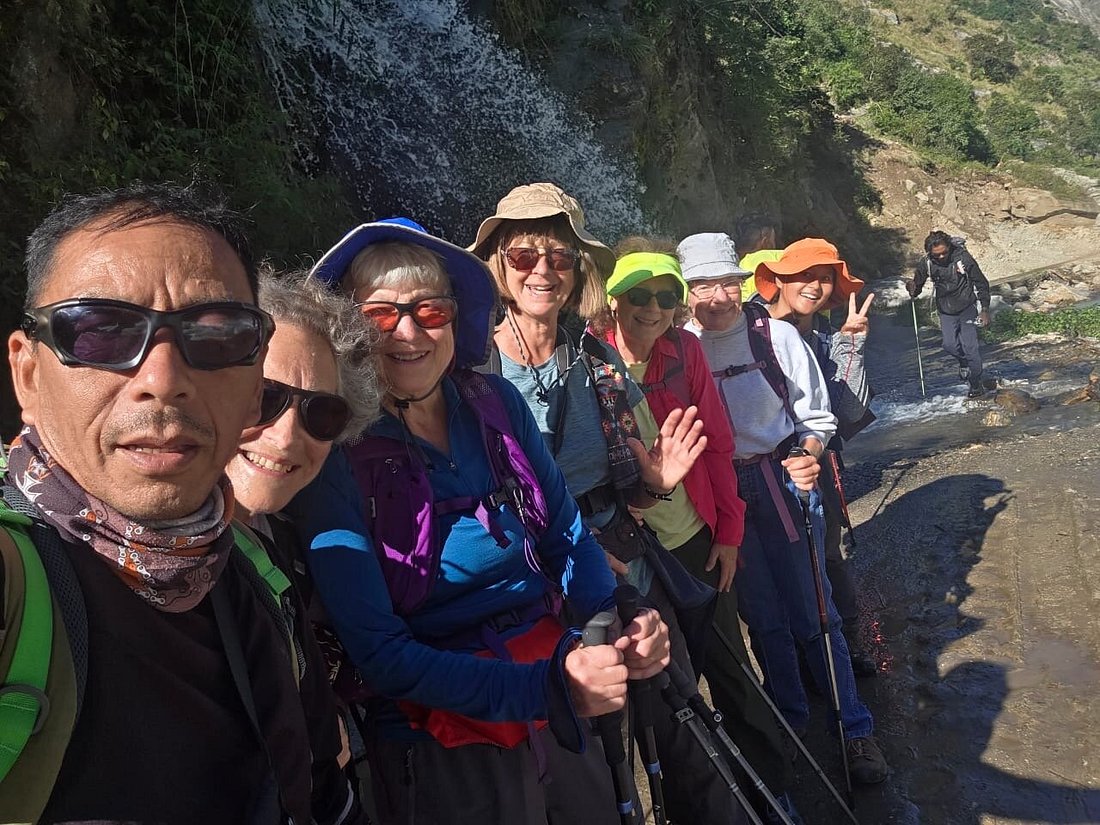
Julie
Date of experience: October 2025
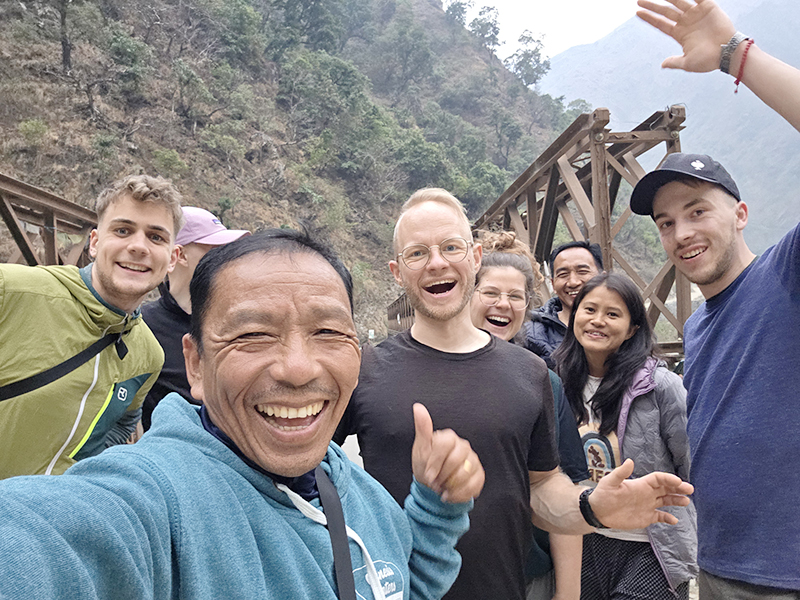
Elias W
Megh is a very professional, funny guide who knows how to lead groups with empathy. I always felt very comfortable and safe because you can tell he’s been doing this job for a long time.
I can wholeheartedly recommend him for any tour.

Jerry S
If you are looking for a fulfilling and exciting trekking experience in the Himalayas, I highly recommend securing the services of Megh Gurung and Kingdom Treks.
I have twice joined teams that Megh guided to Poon Hill in the Annapurna Range, and both times I was amazed by the breathtaking beauty of the mountains, and by Megh’s outstanding service and attention to detail. An extra benefit is his wit, humor, and warm personality. Megh leadership made both treks memorable, fun, and truly unforgettable. You can’t go wrong choosing Kingdom Treks.

Cäoud cloudthes
Great trip! Megh and Sammy took care of everything. From food, to logistics, to accommodation. Couldn’t have been better.

Bill Steinmetz
Looking back, the entire trip was amazing but also challenging because of the altitudes and climbing involved. We all did make it.
Everything was taken care of for us in terms of arrangements and airport transfers. Our guide Megh met us at the airport in Kathmandu, arranged our lodging, meals, flights to and from Lukla, shopping for gear extras in town. All our lodging on the trips was also reserved for us. Meals were all served in the lodges. Megh was on the trek with us along with porters who took our gear. We carried day packs.You should plan 3 weeks minimum for this trip and it will require at least 2 days acclimatization. If I remember correctly, as we got higher, we may have as much as 9 days above 14,000 ft and with that, peaks still rose around us another 4-5 thousand feet if not more. You also should to be in condition for this trek. I also had mild altitude sickness at base camp but did not need intervention. So it is recommended that you learn as much as possible about how to prepare for a trek like this. But the rewards may be well worth it, as some of our photos may illustrate.Consider adding more days for touring in Kathmandu or even for a visit to India on the way home like we did (also arranged by Megh)

Nesrin B
Megh is a great guide, reliable and understanding. He was very helpful to my friend Havva and me during the Annapurna Base Camp trek. He is also fun and interesting. If you travel with Megh, you will be satisfied.

PMR5511
I had an absolutely incredible experience with Kingdom Treks, a top-notch trekking company in Nepal that made my Himalayan adventure unforgettable! Megh and their team delivered a perfectly organized, culturally immersive, and awe-inspiring journey that exceeded all expectations. As someone new to high-altitude trekking, I felt reassured by their focus on safety and flexibility gave me confidence throughout the journey. Megh was phenomenal—knowledgeable, warm, and always ready with fascinating insights about Nepalese culture and the landscapes we explored. Megh’s team, including the hardworking porters, went above and beyond, ensuring we had comfortable teahouse accommodations with hearty meals and jaw-dropping mountain views. Highly Recommend!

REAL INDIA
We had an absolutely incredible experience with Kingdom Trek company in Nepal , Brother Megh is a great guide and a good leader , We enjoyed the trip with this company , always appreciate their efforts, GOD Bless them

Marissa E
As a Canadian female, I’ve trekked with Megh on two trips to Nepal. When we met the first time, I came with a trekking group, we instantly clicked and I now call him “my Nepali dad”. Which he embodies for everyone–he is kind, honest, genuine, and of course, a pro at leading any kind of trek (and making it fun). I went back again a few years later by myself and Megh went above and beyond–picked me up from the airport and helped me navigate busy Kathmandu and Mt. Everest base camp as a solo female. He’s become a lifelong friend of over a decade now, we still keep in touch! If you want a professional who’s been in the game for many years, and someone you can genuinely trust, trek with Megh!